
Żurek: The Magic of Earth, Water and Fire
Silesian Sour Rye Soup
Silesian żurek smells more like home to me than any other soup. Not like an elegant restaurant, not like a celebration, but like everyday life. It brings to mind something warm, calm and deeply satisfying. A kitchen where pots steamed from early morning and the windows were gently fogged from all that cooking. A soup that appeared when it was cold outside, or wet, or grey. When żurek arrives on a Polish table, life immediately feels a little easier.
I think żurek is one of the most remarkable Polish dishes, because it really should not exist. It is born from fermentation, from patient waiting, while flour and water slowly begin to live their own life. There is something quite magical about that, if you stop to think about it.
In old Silesian homes, the sour rye starter was simply part of life. It sat somewhere in a stoneware pot, covered with a cloth. It smelled sour, faintly of bread. It was as natural a part of the kitchen rhythm as bread or sauerkraut.
In my family home, my mother never made the starter herself. Instead she would send me to an elderly neighbour who fermented żurek in a great bucket and sold it to the people on the street for a small amount of money. The buckets stood in the hallway and when you stepped inside, the whole world smelled faintly sour, faintly floury. You had to bring your own bottle. The old lady would stir the contents of the bucket with a large ladle and pour it through a funnel. The smell, the old lady herself, and her mysterious mixture made that place feel extraordinary to me. I felt as though I was stepping into the home of a sorceress.
My mother made this soup in many different ways. Żurek is not a delicate soup. It has character. Acidity. Smokiness from the cured meat. Garlic. Marjoram. Sometimes a little horseradish. Everything in it is direct, honest and real.
It is a soup for people who worked hard and needed food that truly gives strength.
And yet a good żurek can be surprisingly subtle. Because beneath that sourness there is something else: the warmth of fermentation, the smell of bread, the smoke of cured meat, the creaminess of potato or egg.
The egg in żurek appeared on Easter Sunday morning, halved, alongside kielbasa and a piece of smoked bacon. That version was served without cream, clean and pure. A bright yolk sinking slowly into the hot sour broth. Something very simple, and at the same time deeply comforting.
In Silesia, żurek was more everyday than festive. It needed no special occasion. Just a pot, good smoked meat, and time.
And one more thing- it always tastes better the next day. Like everything worth making.
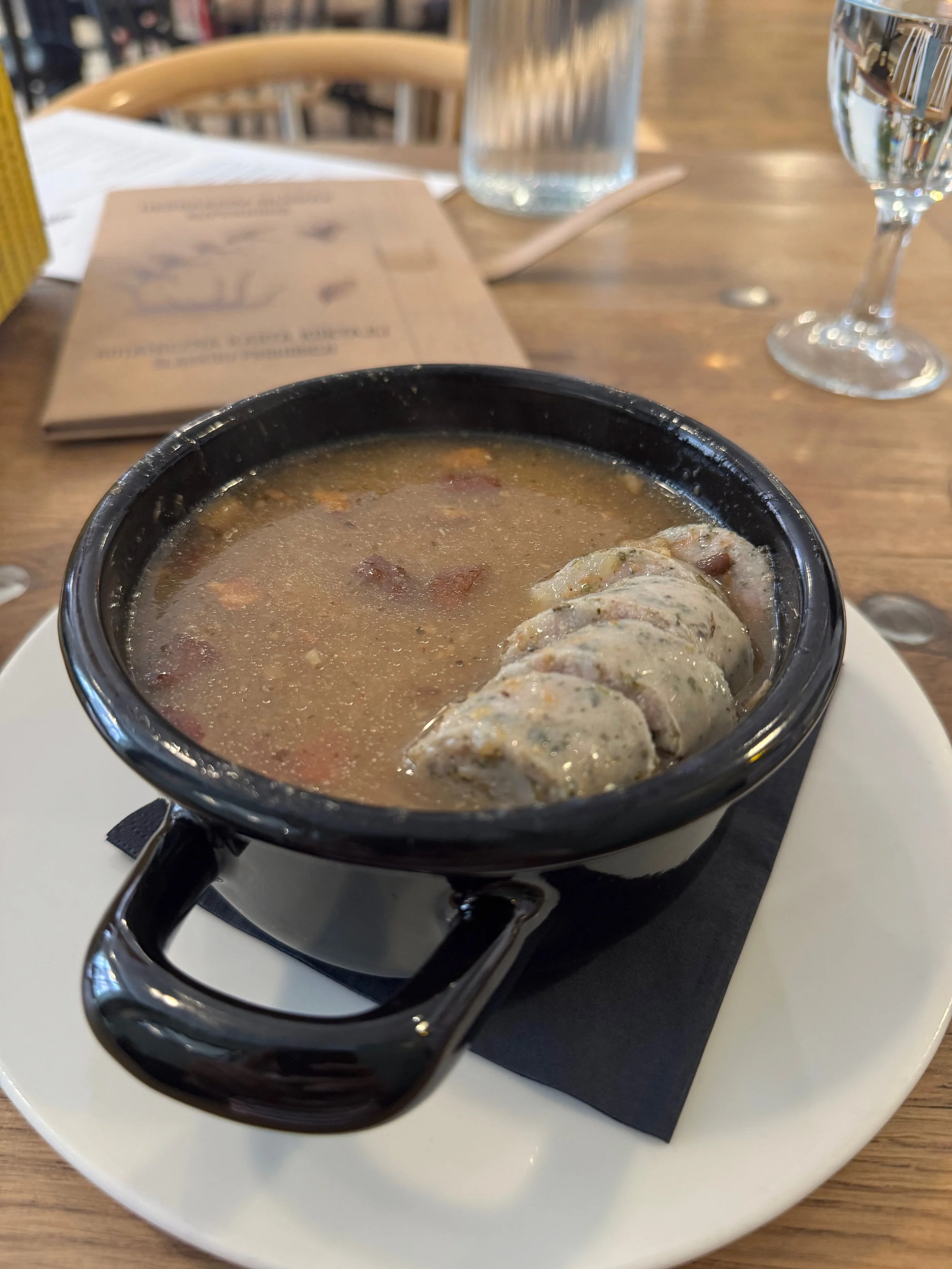
it was this żurek soup from Katowice's "Prohibicja" that brought back today's memories
Silesian Żurek on a Grand Scale
Ingredients for 6 people:
1 litre of sour rye soup base in a bottle, from a Polish deli if possible, always in glass rather than plastic. Approximately 1 kg of pork ribs or pork tails if you can find them. 1 kg of smoked bacon in one piece. One kielbasa sausage per person. 300 g of mushrooms. 2 onions. 6 hard boiled eggs. 4 cloves of garlic. 4 allspice berries. 2 bay leaves. Salt, pepper, marjoram. Full fat cream to finish. Optional for those not eating low carb: potatoes cut into cubes.
Method:
Cover the ribs or pork tails with cold water and cook on a low heat for a minimum of one and a half hours, skimming any foam from the surface at the start. Add the allspice, bay leaves and pepper. After 30 minutes add the bacon in one piece. It will cook alongside the broth and can be eaten cold afterwards or sliced back into the soup.
When the meat is tender, remove from the broth. Strip the ribs from the bone and return the meat to the pot. Cut the bacon into thick pieces. Strain the broth if needed.
In a separate pan, fry the finely chopped onion until golden. Add the sliced mushrooms and cook until they release their liquid and begin to colour. Add the garlic towards the end. Add everything to the broth.
If using potatoes, add them now and cook until tender.
Pour the sour rye base into the broth, stirring as you go. Simmer together for 10 to 15 minutes. Add the sliced kielbasa and cook for a further 5 minutes. Season generously with marjoram, salt and pepper.
At the very end, pour in the full fat cream, stirring slowly. Do not boil after adding the cream ,just warm through gently.
Place one hard boiled egg, halved, into each bowl before serving.
It tastes best the following day. Though it rarely survives that long.
