
Oh, my sweet spring!
Greece has appeared periodically in my life.
In elementary school, I was fascinated by Greek myths. I would read them under the covers with a flashlight, even after my mother told me to go to bed. I always wanted more, one more story. And then another.
Later, in high school, Greece returned to me through sounds. I discovered Vangelis and Irene Papas's Odes and Rhapsodies. These two albums have stayed with me to this day.
My first trip abroad was to Greece. And at a very special time. It was Holy Week, just before Easter. We had already celebrated the holiday ourselves a week earlier, so everything there seemed to take place somewhat outside our own time. It was an extraordinary experience.
What struck me most was the concentration and quiet solemnity of the people preparing for the celebrations. The evening prayers. The softly sung hymns, audible almost everywhere.
One moment in particular stuck with me. I heard one of the songs from my favorite album, softly sung by a young man passing by. I felt as if two worlds had collided for a split second.
https://www.youtube.com/watch?v=WRBUlt7liro
It wasn't until much later that I understood what I had truly heard.
I realized that what I knew from the Vangelis album hadn't begun in the studio. It came from much deeper layers of this place. From something very old. Very liturgical.
And that voice…it was never just music.
Something else struck me then.
The young people participated in everything with the same depth and attention as the elderly. It was completely different from my country, where religious rituals were often treated with distance, sometimes even as embarrassing. There was silence. Attention. Presence.
I remember feeling a quiet envy. Not of the religion itself, but of the depth of the experience. The atmosphere that surrounded it.
On Holy Saturday, after dusk, a ritual was taking place in the city center. I can still see it clearly. People were sharing eggs dyed deep red.
I was surprised to see that eggs held such an important place here as well. In Poland, they hold a special significance during Easter ceremonies. They occupy a special place in the wicker baskets carried to church for blessing.
Over time, I began to understand that this was no coincidence.
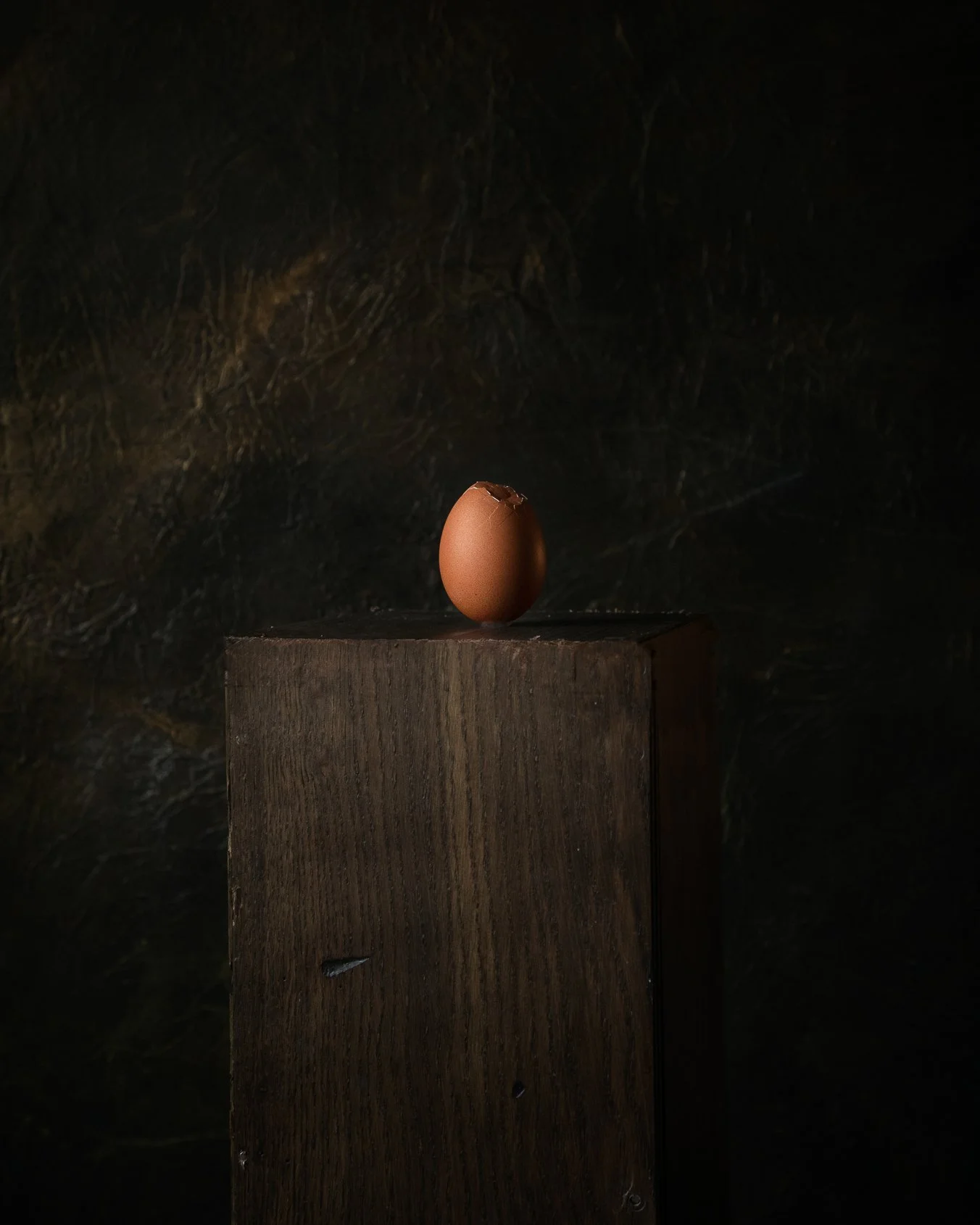
The egg appears in different places, in different cultures, during this special Easter season, but it always speaks of the same thing. Of something enclosed, carrying life within it. Of something fragile, capable of becoming a beginning.
In ancient beliefs, it was more than a symbol. It was treated as a carrier of life. It was buried in the ground, shared among people, and believed to influence what would happen next.
In Christianity, this story was told as a passage from death to life.
But the meaning remained.
Perhaps that's why it seemed so natural there, in Greece.
And perhaps that's why it never seemed like a contradiction to me.
Because beyond place, language, or ritual, everything returns to the same experience: that something that seems closed still lives inside.
That what seems like an end can actually be a beginning.
And that sometimes a single crack is enough to reveal it.
