
Still Alive in a Jar
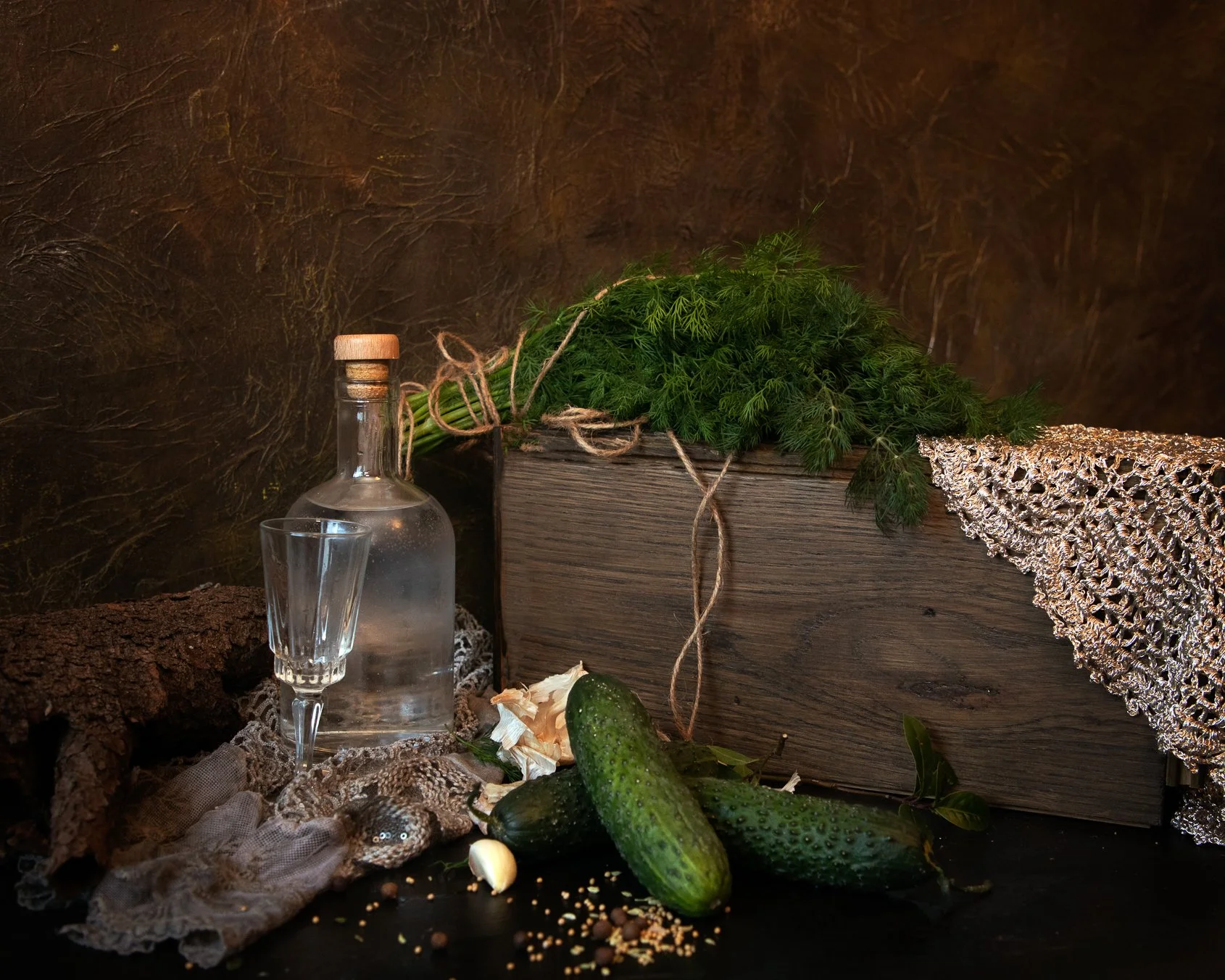
Poles love fermented food. It is prepared in most homes, and recipes are passed down from generation to generation. Pickled cucumbers and sauerkraut are not a passing trend or a fashionable habit. They are part of who we are. These two vegetables occupy a very particular place in Polish cuisine.
When the first cucumbers of the season arrive, a ritual begins. Market stalls and shops fill with small bundles of essential ingredients: horseradish root, sometimes its leaves, garlic, a large head of dill, a sprig of cherry leaves. Every Pole can tell you what these are and what they are for, even those who have never pickled a cucumber in their life. This knowledge is simply part of us.
The cucumber season in Poland begins at the end of June. When I was small, July meant the season of jars. Sterilising jars, carefully arranging cucumbers and their mysterious companions inside. The smell was extraordinary - fresh and green, horseradish and dill leaves with garlic, covered in hot water, fill the kitchen with something close to intoxicating. Then the jars would stand in rows, waiting for the final test of the sealed lid. If everything was as it should be, they would travel down to the cellar, waiting patiently for winter salads.
The whole summer in our house was shaped by the ripening of nature's gifts. Almost everything went into jars - fruits and vegetables of every kind. But cucumbers always came first. Then we waited, with barely contained impatience, for the first test jar, which could only be opened after several weeks. The whole family gathered to check - are they sour enough, salty enough, still firm?
Fermentation begins within just a few hours. Very often the cucumbers are ready to eat the very next day. We call them maloslone then - lightly salted. Delicate, gently sharp, still crisp. Only after several days do they develop their full, powerful character.
In those few days something remarkable happens inside the jar. Fermentation transforms the humble cucumber into something entirely different. Vitamins C, A, E and K appear, along with a wealth of B vitamins and minerals: magnesium, potassium, iron, calcium, phosphorus and zinc. Pickled cucumbers become a magnificent source of probiotics and antioxidants. Nature knows what it is doing.
We eat them straight from the jar. We slice them onto open sandwiches, dice them into salads. We make soup from them - sour, warming, perfect for a winter day.
But above all we eat them the way truly remarkable things deserve to be eaten - slowly, with attention, and with the full awareness that what sits in that jar is the result of something very old. Older than recipes, older than cookbooks. It is knowledge that smells of cellars, of summer, and of a grandmother's hands.
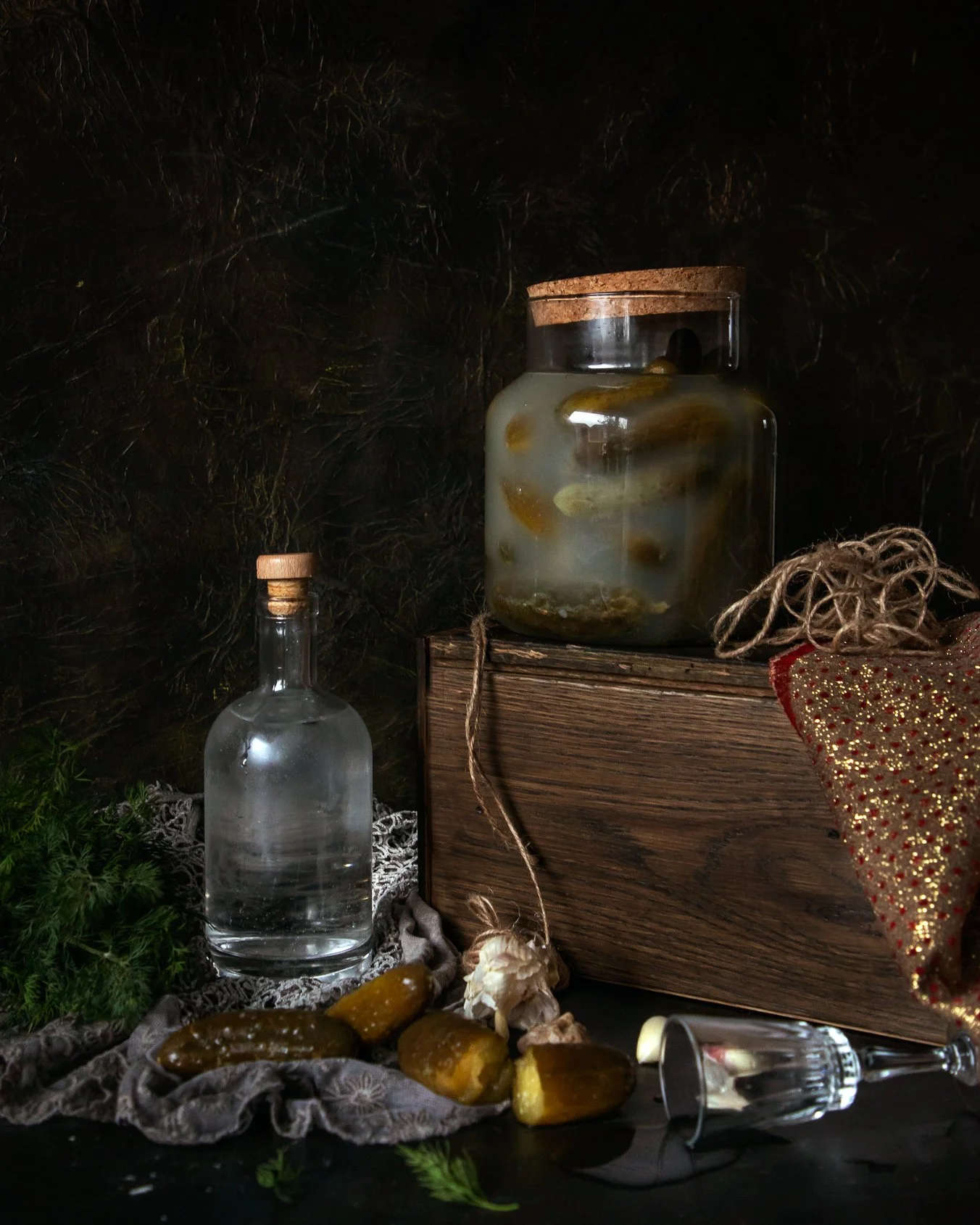
My Mother's Pickled Cucumbers
Wash the cucumbers thoroughly. Sterilise your jars.
Place on the bottom of each jar: a clove of garlic, a few coriander seeds and allspice berries, a bay leaf, and a few leaves of cherry, blackcurrant, or walnut.
These last ingredients are not simply tradition - they are tradition rooted in deep intuitive wisdom. Cherry, blackcurrant and walnut leaves are rich in tannins, which protect the structure of the cucumber during fermentation, preventing it from softening. They are the reason a cucumber remains firm and crisp after weeks in the jar. In warmer countries, vine leaves were used for the same purpose. Here, in the north, people reached for what grew in the garden. It was an excellent choice.
Bring water to the boil. Add one tablespoon of salt per litre of water.
Before placing the cucumbers in the jars, pierce each one in several places with a thick needle. This accelerates fermentation, allowing the brine to penetrate deeper into the flesh.
Pack the cucumbers tightly into the jars. Pour over the hot brine, leaving space at the top -fermentation can cause the liquid to rise. Loosely close the lids.
After one to one and a half weeks, seal the jars tightly and move them to a dark, cool place.
If you are pickling in a large jar, stoneware pot, or any other open container, weigh the cucumbers down with a plate and something heavy - they must not float to the surface. Cover the vessel with a linen cloth and tie it with a rubber band or a piece of string.
