
Wykopki – Food from Earth and Fire
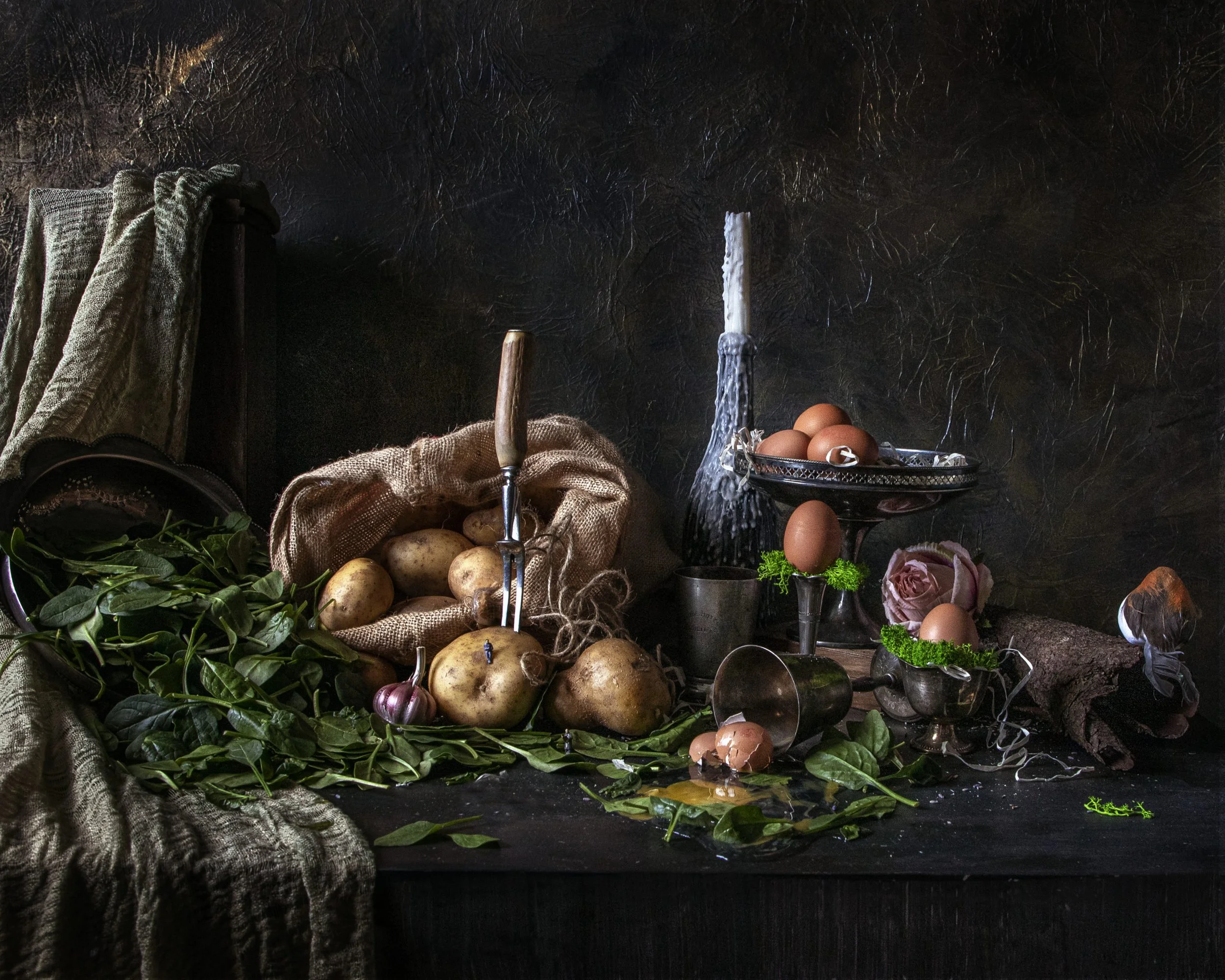
Wykopki means digging hidden treasures out of the earth. Every year, always at the same time.
Potatoes. The simplest of foods, almost like daily bread.
I only took part in a real wykopki at my grandmother’s once, but that one time stayed in my memory as something extraordinarily beautiful and a little magical.
I was a small child, and strange things were happening all around me. Great tractors were working across the fields. One disturbed the earth, bringing up what had until then been hidden beneath it, while another gathered the potatoes spilling out behind.
Then people would walk onto the field. From a child’s perspective, they looked a little like sleepy ghosts moving through the autumn landscape. They collected the potatoes left behind by the machines and built enormous bonfires from the dried potato haulms.
And the potatoes went straight into the hot ashes.
That was where the magic began.
Imagine cold air nipping at your nose, your breath turning to steam and a beautiful autumn sun overhead. Smoke drifts from the fires and suddenly, somewhere between the smell of earth and burning plants, another scent appears.
Baked potatoes.
Whenever I remember it, I still wonder how my grandmother knew when they were ready, when it was time to dig them out of the hot ashes.
She simply knew.
We ate them straight from the fire. With nothing but salt.
They tasted heavenly.
I would toss a hot little potato from one hand to the other because it was burning my fingers. The skin was crisp and the ash still clinging to it crunched slightly between my teeth, staining our hands, our faces and probably everything around us.
So simple. And so good.
Today, when I return to that memory, what strikes me most is how natural the whole scene was. The earth was giving back what had spent the summer growing beneath its surface. People gathered the harvest, burned the dry haulms, and in the heat they created, baked the potatoes they had pulled from that same earth only moments before.
Nobody talked about being connected to nature.
We simply lived in it.
Potatoes were, after all, one of the most ordinary foods of my childhood. Where I grew up, one of the most important parts of Sunday dinner was the dumplings made from those same cooked potatoes.
Small, silky dumplings with a little hollow in the middle where the gravy would gather.
And perhaps it is only now that I can see how long the journey was from those earth-covered little things spilling across an autumn field to the white dumplings sitting on our plates on Sunday.
And those are the dumplings I would like to leave here, at the end of this story.
No scales. No measuring.
Just the way we made them at home.
Silesian Potato Dumplings
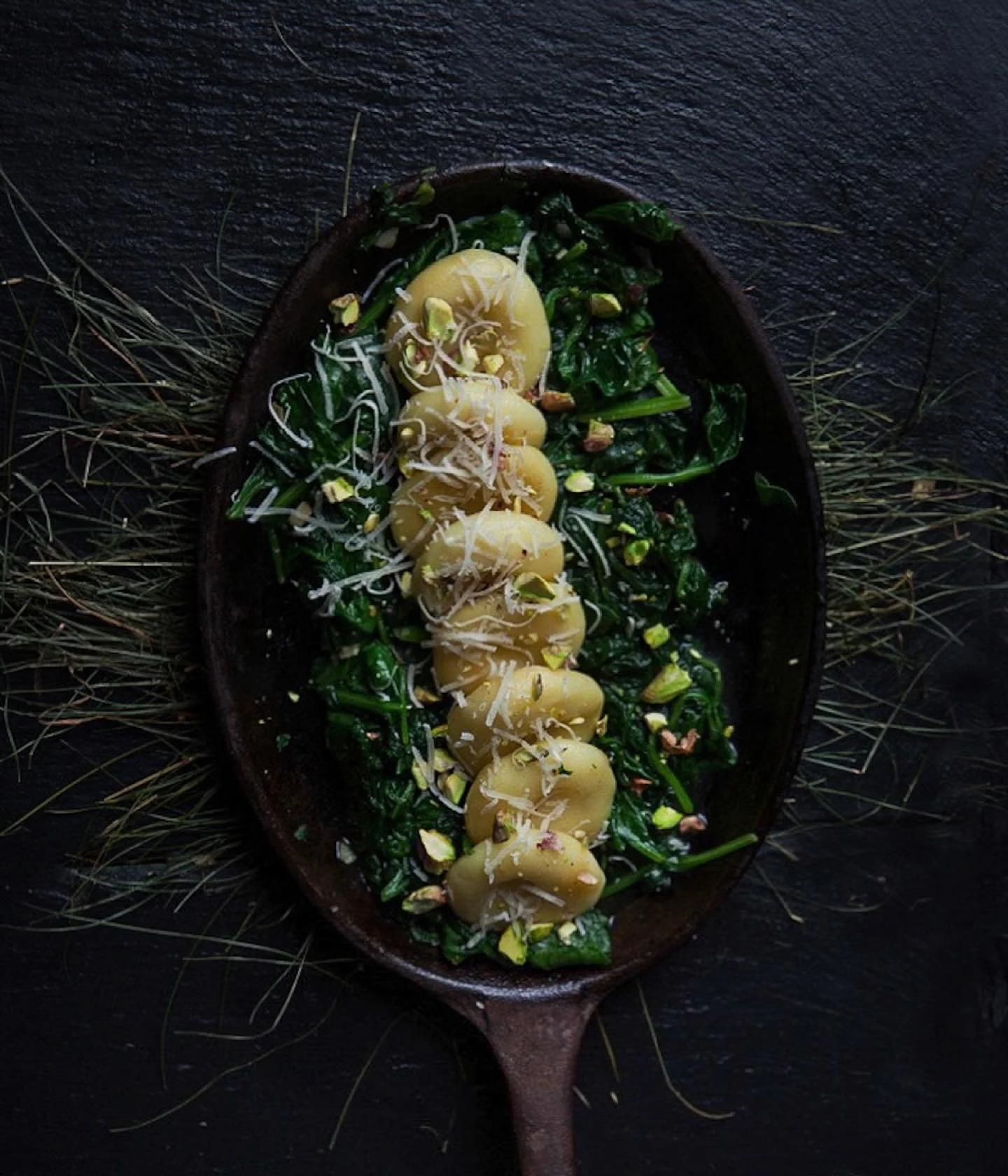
Choose good yellow-fleshed potatoes, cooking type B or C. In other words, not the waxy kind you would use for a salad.
Once cooked, but while they are still warm, pass the potatoes through a potato ricer or push them through a sieve.
Level the potatoes and divide them into four equal sections. Remove one quarter and fill the empty space with potato starch, using exactly as much as the potatoes you removed. Then put that quarter of potato back in.
Add an egg and quickly bring everything together into a dough. If it feels too loose, add more potato starch, one teaspoon at a time, until the dough feels firm and easy to shape. Be careful not to add too much, though, or the dumplings will become floury. Do not work the dough for too long either. As soon as the consistency feels right, stop.
Then roll each little dumpling between your palms, flatten it slightly, and finally press your finger into the centre to make that essential little hollow.
For the gravy, of course.
Drop the dumplings into a pan of boiling, salted water. Give them a gentle stir and wait until they float to the surface. Lift them out with a slotted spoon.
Pour over some gravy or…
let them cool and fry them in a little butter.
